Transition Café – Self Care

Submitted by William Mutch Feb 2, 2018
A Chestnut-Backed Chickadee flew into the house, this morning. I waited until he or she had worn themselves out with the window thing, then picked them up and carried them outside, getting some bites in the process, although once my guest figured out what was going on they settled down, some, but with attitude. Earlier in the week, I put up some birdhouses, one for Bluebirds, one for Wrens, and another for Chickadees. Of course, those specifications only apply if the Birds have been reading the same books I have, which is not always the case.

I was part of a difficult conversation, last night, and lives were changed, and will continue to be, as a result. These things don’t always go the way you think they will, and sometimes, doing the thing that is clearly best for everyone doesn’t feel the way it seems like it should, so…not much sleep afterwards. Sitting with this, this morning, I learned that an old friend had passed, about a week ago. She and I hadn’t been close close, but we had shared some adventures, in the early days when I was starting out in the Permaculture and Nature Awareness communities. The nature of those communities breeds close connections quickly, which remain so, over the years. She has been a strong and needed voice for keeping space for non-binary gender diversity, among other things. She was within a couple of years of my age. I have a complicated relationship with Death, as mentioned in many a past Transition Café newsletter, but it still involves a change in our relationship. So…a surreal few days, accentuated with the historically beautiful moon performance. Oh, and of course the insane $#!^-show that is the news, right now.

But, sometimes, life is just like that…you get to help a Chickadee through a major event in their life while working out major events in yours, while your culture and even your planet work out major events in theirs.

So, I have to ask again about self-care…

As activists, we often run ourselves even more ragged than the rest of everyone, and in Silicon Valley that is saying something. We frequently have a very hard time taking a break and setting down the burden, from time to time, until we pick it up again. So important, though, to rest and care for ourselves, so we can come back refreshed and recharged, to fight the good fight, another day. If we burn out, we can end up walking away from this work that is so important to so many.

What do you do to care for yourself? Do you take sensible breaks during the day, the week, per month, per year? Do you eat well, sleep well, get enough exercise, drink enough water, meditate, take regular news-fasts? Are you using your work to self-medicate something else? If you were, would you know it? What is that frantic hard-work ethic keeping us from feeling? What happens to you, when you slow down? Can you slow down enough to meet the Wall of Grief, before it catches up to you? Are you responsibly sitting with that grief, so you don’t act it out on the people and environments you are trying to be an ally for?


Please join us on tpa_cafe, or tpa_chat, you can join at http://www.transitionpaloalto.org./

Bringing Permaculture to Life

Permaculture is a design framework that brings systems thinking and an ethical sensibility to the creation of environments that are not just sustainable, but also regenerative. Permaculturists start by observing how nature operates in forests and other natural settings, and then design environments that incorporate the natural patterns and relationships.

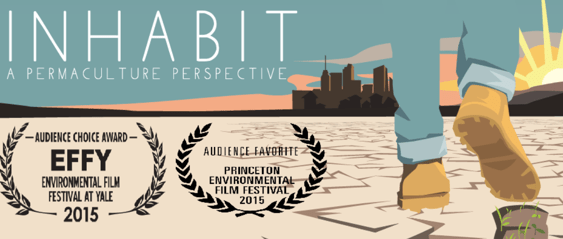
On January 26, Fourth Friday attendees were introduced to the diverse and inspiring world of permaculture. The film ‘Inhabit’ featured living permaculture projects on farms, in cities, in suburbs – ranging from a rooftop garden in the middle of New York City to an idyllic rural spread of many acres.

After the film, permaculturist and TPA steering committee member William Mutch answered questions and shared his own perspective on permaculture.  He explained that permaculture is based on ethics and principles — not a step-by-step process — and emphasized the importance of beginning with patient observation.

William also hosts the Permaculture Cafe, a weekly gathering of people who are interested in learning more about permaculture. The cafe is held every Wednesday 6-7:30pm at Red Rock Cafe in Mountain View.  If you’re on the TPA mailing list, you’ll get an announcement each week.

And to start learning more now about permaculture principles, ethics, and practices, you can go to permacultureprinciples.com.


Transition Café – Threat and Community

Cafe notes from William Mutch, January 19, 2018.
I took a sick day from Tracking Club, this Sunday, and was drinking tea and making breakfast, watching the array of Birds in the yard, when a Coyote walked through, along the edge of the “lawn”, leisurely sniffing and peering into the Juniper bushes. I was the only one who was startled. Everyone else-Quail, Sparrows, Juncos, etc, while they were clearly aware of the Coyote, just kept doing their thing, moving aside to let the Coyote pass, without alarm or even apparent hurry.

I am used to usually having advance notice of when predators are active in the area, because the Birds are aware, and respond in ways that anyone paying attention can pick up on and usually figure out what kind of predator is coming/present. In some situations, certain Birds (and other critters) will recruit aware Humans (and other critters) to assist with problems that are beyond them. These Birds, multiple species, were behaving as if this Coyote were a Deer (yes, I know Deer will eat Birds if given the need and opportunity, but, anecdotally at least, that seems rare).

This Coyote is male, and seems to have a scar on the left side of his face. He was soon joined by a female with a heavy left ear, and another whose gender I couldn’t figure out. We have seven Coyotes who are regulars on the land, up here, maybe related, maybe not. I have watched them frolic and wrestle with each other within feet of a day-bedded buck, who seemed interested, but unalarmed. These three were interested in an old Deer leg which one of my housemates had found in the Oaks and brought up into the garden, with one or another running around with it and chewing old hide and muscle off of it. It was like watching Domestic Dogs wrestling over a bone.

Why no alarms sounded about the Coyote? Was he offering body language, scent, pheromones, or something else, indicating he was not hunting? Was he clearly hunting Rodents or Lagomorphs, instead of Birds? More study needed. We are told, of course, that the lives of Birds, and others, depend on being able to tell when predators are hunting, versus not, so they get out of the way at the appropriate time, but don’t stay in a constant state of agitation, burning precious calories, when predators are either absent or not a threat.

Of course, a predator’s life depends on being able to think like their prey, and also convince prey that they are not hunting or non-dangerous. I have watched Sparrows fade into the underbrush, repeatedly, exactly two minutes before a Hawk flew over (after watching this a couple of times, I started timing them), but have also seen another Hawk fly low over feeding Sparrows without striking or them reacting in any way that was obvious to me. (I have also heard a Sparrow sound an alarm at a Turkey Vulture, but that only happened once, and I assume was an adolescent Sparrow.)

Many authors currently writing about community building among Humans talk about the necessity, even urgency, to be able to identify Human predators and parasites, as they will erode or even detonate a community. They refer to the “Dark Triad” although some are suggesting that it should be the “Dark Tetrad”, adding in another personality type, but these are basically folks who are wounded, angry, needy, etc. in ways which even extremely healthy communities have a hard time providing a container for.

Each of us, obviously, has wounds, and some of us “self-medicate” those wounds with one behavior or addiction or another, or treat them as “sacred wounds” which drive and inform our passion for self-healing (as opposed to self-medicating) and being of service to the world. Some of us use those wounds as a reason to hurt others, either the folks who hurt us, to hurt ourselves, or to hurt folks who remind us of either the folks who hurt us or of ourselves when we were hurt. Many of us, if we are honest with ourselves, probably shift through those different solutions, over the course of our lives, or maybe even over the course of a day. Most of us have a default setting, though, which we return to when we are hungry, angry, lonely, tired, dehydrated, etc. We refer to this as “Life”.

If this is as crucial as many suggest, then how do we identify Human predators and parasites? Some are so good at mimicking healthy folks that they are practically invisible, but their effects on a community are not. Like icebergs, destructive behavior patterns and personalities leave ripples around themselves. “Traditional” cultures would have identified a Donald Trump or an Evita Peron well before they had amassed a fortune or a strong group of followers. The consequences of failing to identify and deal with them would have been well-represented in the oral traditions, and the elders would have been constantly vigilant.

Who has that job, in our culture? Who educates the young on how to tell the predators from the ones the predators are mimicking? We do as much of disservice to our children, of course, if we mistake a non-predator for a predator, as the other way around. That is sometimes called “Friendly Fire”. The first job of the predator, of course, is to take out anyone in the community who can identify them or stop them. They generally act by destroying their reputation and getting the community to turn away from or exile them, but sometimes by other means, like isolating and controlling them, or simply killing them.

Grim topics, and ones which Good People don’t discuss, or even spend time thinking about. Best to go back to our reality shows and celebrity gossip. After all, why worry about something that hasn’t happened yet? Why prepare for something which Can’t Happen Here? The Gazelles who insist that that Cheetah is actually just another Gazelle don’t live much longer than the Monkey who thinks the Snake is a log. But, if Gazelles think all the other Gazelles are Cheetahs, they isolate themselves from their allies, and can fall prey to the very ones they were trying to protect themselves from. Good thing that Can’t Happen Here!

Special February Fourth Friday – ‘Look & See’

We are pleased to welcome Peninsula Open Space Trust as a co-sponsor for this special Fourth Friday screening of LOOK & SEE.

look and see

As I see, the farmer standing in his field, is not isolated as simply a component of a production machine. He stands where lots of lines cross – cultural lines. The traditional farmer, that is the farmer who was first independent, who first fed himself off his farm and then fed other people, who farmed with his family and who passed the land on down to people who knew it and had the best reasons to take care of it… that farmer stood at the convergence of traditional values… our values.”
— Wendell Berry, Author, Activist and Farmer

LOOK & SEE revolves around the divergent stories of several residents of Henry County, Kentucky who each face difficult choices that will dramatically reshape their relationship with the land and their community.

In 1965, Wendell Berry returned home to Henry County, where he bought a small farm house and began a life of farming, writing and teaching.  This lifelong relationship with the land and community would come to form the core of his prolific writings. A half century later Henry County, like many rural communities across America, has become a place of quiet ideological struggle. In the span of a generation, the agrarian virtues of simplicity, land stewardship, sustainable farming, local economies and rootedness to place have been replaced by a capital-intensive model of industrial agriculture characterized by machine labor, chemical fertilizers, soil erosion and debt – all of which have frayed the fabric of rural communities. Writing from a long wooden desk beneath a forty-paned window, Berry has watched this struggle unfold, becoming one of its most passionate and eloquent voices in defense of agrarian life.

Filmed across four seasons in the farming cycle, LOOK & SEE blends observational scenes of farming life, interviews with farmers and community members with evocative, carefully framed shots of the surrounding landscape.  Thus, in the spirit of Berry’s agrarian philosophy, Henry County itself emerges as a character in the film – a place and a landscape that is deeply interdependent with the people that inhabit it.

RSVPs via EventBrite are required. Click for the official announcement, where you can scroll down to register.

Friday February 23, 7:30-9:30pm
Main Hall, Unitarian Universalist Church of Palo Alto,
505 E. Charleston, Palo Alto
All ages welcome! FREE, Donations appreciated.

Sponsored by Transition Palo Alto, Green Sanctuary Committee of UUCPA, and Peninsula Open Space Trust.


January Fourth Friday/Films of Vision and Hope – ‘Inhabit’

Join us for a close look at permaculture, the transformative approach to agriculture, economics, society, and governance, that inspired the Transition movement and much more.

Inhabit introduces permaculture projects, concepts, and people to help everyone understand what permaculture is all about.

Inhabit film.png

If you’re already familiar with permaculture, you’ll get a glimpse into what’s possible – what kind of projects and solutions are already underway and what actions you might want to take.

If you’re not familiar with permaculture, you’ll learn about this revolutionary way relating to the Earth.

For everyone, it will be a reminder that humans are capable of helping to heal our planet.

Filmmakers Costa Boutsikaris and Emmett Brennan documented more than 20 sites in a range of rural, suburban, and urban environments. They explored responses to local and global challenges, ranging from issues of food, water, and medicine, to governance, economy, and culture.  Come learn what they found out and share your own experience, ideas, and perspective. See the trailer…

Friday January 26, 7:30-9:30pm
Fireside Room, Unitarian Universalist Church of Palo Alto,
505 E. Charleston, Palo Alto
All ages welcome! FREE, Donations appreciated.

Sharing the Holidays

The Share Faire took place this December at Cubberley Community Center once again. We shared holiday decorations, goods, books, garden plants and persimmons, vinyl records, clothes, fabrics, toys, and so much more.

Inside the two rooms, A6 and A7, we had two themes: homemade holidays, and garden/making. Kids of all ages were busy making colorful rolled beeswax candles with Lori, who also showed how to make melted ones (and left some candle wax to take home). We got a chance to make salt dough creations – menorahs and ornaments – with Joyce – and she showed how to color them gently, and displayed an heirloom handmade menorah. Peggy shared her expertise with worms to hold and answered questions on home composting. Peter demonstrated a simple and unique applesauce recipe that was flavorful and delicious. Barbara and Herb led the sessions on storytelling – everyone regaling each other with tales from holidays past.

Click through the slideshow below:

This slideshow requires JavaScript.

Transition Café – Giving Thanks

Submitted by William Mutch:
I had a few ideas for this week’s Transition Café, but we missed last week, and I’d really like to have a giving of thanks. This has been a shocking week, on top of a shocking year, to the degree that it is beginning to be difficult to be shocked by what is coming out of Washington, D.C. Last night, after the Permaculture Café, I got to explain across a language barrier why I have a safety pin on my coat. It took a bit, but we got there, and the fear and rage the woman expressed at the week’s issuances from our President caught me off guard. Again, I’m surprised at myself for being surprised at this. She asked if the Safety Pin-Wearers are an organization, I said we are a loose one.

One of the things I am thankful for is that we are not going down without a fight, and possibly not at all. There are so many good people doing what they can to help and support each other through this parade of “it-can’t-happen-here” scenarios, I feel as inspired by them/us as I feel shocked, outraged, and saddened by what we have unleashed upon ourselves.

Also, the Permaculture Café was on fire, last night. The conversation gloriously bounced all over the Permaculture spectrum, and spent no little time on Holistic Management, then on to Darren Doherty and Geoff Lawton. Thanks to everyone who showed up, so glad to have you! You’ll probably hear about this again in the announcement for that Café, shortly.

Lastly (not really), so very thankful for the inclination and ability to continually learn and teach new skills. I’m teaching a tool sharpening and care class this Saturday, and in preparing for that I’m looking at the fabulous web of skills attached to that one, and the ones which led me to it. Wonderful memories of those learning edges.

And…thanks to all of you who follow these e-mails (in the old days we might have called them “columns”), and who write in and/or chat with me about your reactions and ideas for our Café conversations. I realize that our “virtual Transition Café” community has grown, over the years, and seems huge, at this point. This is happening in the Permaculture Café, too, where folks in the “virtual Café” are following along, reading the books along with us, and either writing in or talking to me about them in person.


Fun and Games

A fine time was had by all at the first ever TPA Games Night.  Folks showed up with games, snacks, and a spirit of humor and adventure. Although Pictionary enthusiasts had trouble illustrating ‘ban’ and ‘unconscious,’ no one minded. And the Forbidden Island team did manage to get off the island successfully.

If you missed the evening, not to worry, we’ll do it again in the new year!

This slideshow requires JavaScript.


Holiday Share Faire 12/10 – Save the date

Our Holiday Share Faire is around the corner on Sunday, December 10th, at 1-3pm. We’ll occupy two rooms on the A-block again this year at Cubberley Community Center, and fill them with all things holiday.

Some things slated to be offered by skilled TPA volunteers and regulars:

  • Garden Share! While the Palo Alto Garden Share lacks a permanent home, we’ll have a chance to share the bounty of our gardens at the Faire. Bring your produce, plants, seeds, and garden books and tools to share.
  • Telling stories. We’ll share stories about this season – of darkness and light. How does it impact your traditions? We’d also love to share tales of best and worst gifts given and received over the years. Read an article here by Mas Masumoto (of Masumoto Farms) on how and why our stories are so important to share, especially in these times.
  • Peter Ruddock will share a favorite holiday recipe with details on how to make it. Yum.
  • Lori Stoia will teach us how to make candles – and you’ll have a chance to make a simple beeswax candle of your own to take home.
  • Let’s gather together and make homemade decorations, garlands, menorahs, ornaments and more from natural materials, foods, and dyes. Joyce Beattie and Barbara Weinstein will teach us how.
  • Peggy Prendergast offers her skills as a Master Gardener on composting for the winter.

We’ll also share Holiday decor, cards, and our usual goods share.

Looking to demo something else or help out? Contact us. We’re always happy to get more volunteers :  set-up, organization, greeters and more.  If you’d like to participate, please sign up here.

Please put the date on your calendars and join us in this joyous season!

More at transitionpaloalto.org/sharing-expos/