Video links for Essential Knowledge for Transition

Many of you who weren’t available for the first two sessions of Essential Knowledge for Transition Sept 13 and Oct 18 requested that we share a videos so you could catch up on the material you missed.

Don’t miss the last two session Oct 25. Scroll down for details.

Here are the links for session one. We’ll post the links for session 2 as soon as they are available.

Session 1 links

You can stream the program in its entirety here: http://bit.ly/EK4TSessionOne

If you don’t have time to watch the entire session, we’ve extracted four shorter clips of around three minutes in length. To treat yourself to a taste of what we learned, check out these pithy excerpts:

Why we all need to understand how the banking system works (2:56)
http://bit.ly/UnderstandBanking

The effects of creating money as debt (3:28)
http://bit.ly/MoneyCreation

Re-balance private and public ownership of banks (3:15)
http://bit.ly/PubPrivOwnership

Why housing is unaffordable, in three minutes (2:47)
http://bit.ly/UnaffordableHousing

Please register here, and bring your friends! This is information that all informed citizens need to know.

The Pope’s Encyclical Book Group – Getting deeper

The Pope’s Encyclical book group continued October 8 with a thoughtful discussion about Chapter 2,”The Gospel of Creation.” In the words of one participant, the session provided a “safe container” to express personal feelings about the Pope’s message in the context of each person’s religious, ethical, and cultural perspective.

Everyone learned from each other and deepened their understanding to pope’s central message: that we need to turn away from a theology of dominion over nature to one of stewardship, where we recognize the value and interdependence of all life on earth and embrace a shared responsibility for making things better.

The book group will continue October 15, with a discussion of Chapter 3, “The Human Roots of the Ecological Crisis.” Newcomers to the group are welcome. All that’s required is an interest in learning from the document and from others, and a commitment to try to complete the reading assignments. If you’re interested, please send email to barbaraweinstein2@gmail.com.

You can download the Encyclical here.

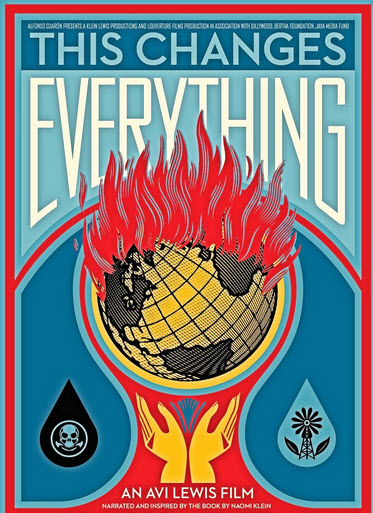
October Fourth Friday/Films of Vision and Hope – This Changes Everything

An epic attempt to re-imagine the vast challenge of climate change.

Inspired by Naomi Klein’s international non-fiction bestseller This Changes Everything, this film presents powerful portraits of communities on the front lines, from Montana’s Powder River Basin to the Alberta Tar Sands, from the coast of South India to Beijing and beyond.

In the film, Klein builds to her most controversial and exciting idea: that we can seize the existential crisis of climate change to transform our failed economic system into something radically better. Click for film trailer. 

Friday October 23
7:15-9:30 pm (7:15 meet and greet, film starts promptly at 7:30), conversation follows the film
Unitarian Universalist Church of Palo Alto Fireside Room
505 E Charleston Rd, Palo Alto, CA 

this changes everything

Transitioners in action: David Herron on Transportation, Energy, and more

By David Herron

Our transportation system is one of the key culprits in climate change, environmental degradation, the global war to control access over oil supplies, the threat of peak oil, the manipulation of domestic politics, and more.  The transportation system is dependent on fossil fuels, worsening all those issues and more.  The inherent inefficiency of the car-dominated urban design we inhabit degrades our quality of life instead of the great boon we were promised.  Unfortunately not enough people recognize these problems, and the powers-that-be make decisions which worsen the overall result.

I’ve thought about and worked on these issues for years, dating back to the mid-70’s between the two faux Arab Oil Crises.  As a teenager, rather than studying which car was fastest, or coolest looking (1967 Mustang rocks), I looked for ones with the highest fuel efficiency and pondering a career in developing solar panel technology.

At college the computer room, instead, lured me into a software engineering career, while those issues remained in the back of my mind.  By 2009 I could no longer contain myself, because the worry was too strong.  In September 2008, attending the ASPO conference in Sacramento amplified my worries.  By December 2008, there was an official training on starting Transition Towns initiatives.  Taking that, and reading the Transition Handbook, was eye opening, and like a breath of fresh air.  Within a few months Transition Silicon Valley was launched.  In the meantime the global financial collapse erased Sun Microsystems, and my job, from the planet.  With a hefty layoff package and the freedom to finally do some work to contribute to solutions, I took some time to study my options.

One thing led to another, and a career in citizen journalism / blogging was launched.  The driving idea is to help enough people know the truth to make a positive difference.  Today the vehicle for that work is my blog website, LongTailPipe.com.  It’s not only a news blog about electric vehicles and related technology, but contains a large information/education section going over the issues below.

Reworking the transportation system is a multi-faceted problem, when looked at through the comprehensive thinking Transition encourages.  It’s much more than replacing one kind of car with another kind of car, because that leaves a large number of unsolved problems.

Land use and grid lock:  Individually owned cars are an inefficient way to move people around town.  The current system wastes a large amount of land on highways and parking lots.  One needs transportation and it’s possible to access transportation without owning a car.  One should do what they can to ride bicycles and take mass transit.  Through smart phone devices one can access services to ease transportation choices, from easier transit planning, to accessing car sharing services, to ride-sharing services like Uber/Lyft.  You don’t have to park a car you don’t own. 

Self Driving Cars:  In the coming years “self driving cars” could drastically change all this.  First, computerized control means they’ll be able to travel much more densely spaced than human-driven cars can, and therefore use road space more efficiently.  Second, all the car companies are pondering what amounts to a self driving taxi that has no human driver that you beckon via a smart phone app.  We can see prototypes of these cars on Silicon Valley’s streets today, and all the car companies have laboratories in Silicon Valley to research this technology.

Climate and Environment:  Fossil fuels make a huge negative impact on the world around us.  The sooner we stop using fossil fuels the better.  Where natural gas and coal primarily are used to generate electricity, crude oil is the primary transportation fuel.  Electric vehicles are a great alternative because they’re 100% clean at the tailpipe (no tailpipe), don’t drip oil on the highway, etc.  

Clean Electricity:  The source of one’s electricity is very important, so while an electric car is 100% clean the electricity may not be.  California’s electricity is very clean, but still uses lots of natural gas (a fossil fuel) and therefore still contributes to climate change.  It’s necessary to couple a switch to electric cars with a switch to renewable electricity.

Peak Oil: Of course we’re facing a bleak future of declining oil supplies.  Fracking is currently giving us a glut of oil and natural gas, but research shows fracked oil fields have a short lifetime and quickly go into depletion.  This gives us another reason to quickly get ourselves off fossil fuels.

Vehicle resource impact:  Similar to peak oil is the depletion of every other resource, such as the metals used to build everything around us.  Big vehicles use more resources to build, and therefore deplete the resources more quickly.  Decreasing the number of vehicles owned per person should fix this problem, for example by using mass transit.  Using smaller vehicles like motorcycles or bicycles also reduce resource requirements.

Wars in oil-rich areas:  Almost every current war today is a fight over access to crude oil resources.  Those “terrorists” we’re fighting in various places are really fighting against meddling from Western powers whose goal is manipulating whole countries into providing crude oil supplies.  The best way to ease world tensions is to reduce or eliminate fossil fuel consumption.

Politics:  The remaining oil in the ground is a huge economic incentive to the oil companies to extract that oil and sell us the oil products.  There’s a trillion or so remaining barrels of oil, worth $100 trillion or more in economic activity.  That’s fueling the manipulation of U.S. politics in order to ensure the oil companies can reap those rewards.  Which means we have a huge problem to tackle in terms of negating that manipulation in order to stop fossil fuel consumption.
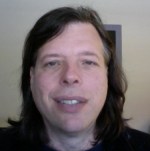
david herron photo

Up close and personal with the Pope’s Encyclical

The Pope’s Encyclical book group kicked off 9/24, with 15 people from the Transition Palo Alto community, all interested in learning more about what Pope Francis has written in his recent Encyclical on climate change, “Laudato Si,” or “Care for Our Common Home.”   With Francis’ visit and his address to Congress early in day fresh in the minds of many, it seemed a perfect time to start exploring this unique document by a world leader who is clearly trying to shake things up by speaking frankly and eloquently about climate change, the plight of the poor, the political and economic system, and corrupting influence of power, wealth, and greed.

The initial session focused on the introduction to the Encyclical, while the next six sessions will each deal with the main chapters in the document. There’s also a possibility of follow-on sessions to discuss actions that we can take, or to address some of the issues that were put in “storage” as important, but not directly related to the Encyclical document.

The book group is open to others who want to read the document and have a meaningful conversation about what it means and how it can motivate and inspire social action. If you’re interested, please send an email to barbara@ontrk.com. We’ll answer any questions and give you detail on how to participate.

Click to download the Encyclical document (free).
Pope Francis Encyclical book group guidelines.

And these are some topics we put on the “shelf” for possible future discussion:

  • How does the Pope’s concern about the poor, etc., jive with his canonization of Junipero Serra?
  • What about population and birth control and how they relate to the other issues he discusses?
  • What about our treatment of animals, and the morality of eating animals?

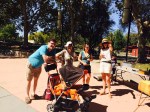
emily peter paul herbchris meredith

Cool time at the Share Faire

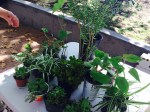
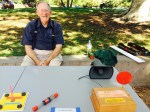
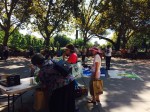
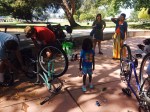
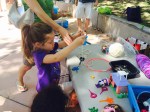
Despite the beastly hot day, cool times reigned at the September Share Faire (at the Mitchell Park bowl).  Kids of all ages played with the noise vibration machine, sampled tasty sourdough bread, browsed the garden, household, craft, and clothing items, and more. People had flocked to Mitchell Park to be outdoors, and lots of newcomers stopped by.

Transition book group – the Pope’s Encyclical – starts Sept 24

Laudato si’, or “Care for Our Common Home” (a.k.a. the Pope’s Encyclical), is an extraordinary document that speaks eloquently about the profound challenges facing the world today and calls for swift and dramatic action. The overriding issue is climate change, but not in isolation – the Pope describes how climate change is inextricably tied to social justice, the growing divide between rich and poor, and the economic institutions that perpetuate the status quo.

What does the Encyclical say? What is its potential impact? What does it mean for the Transition Town Community? How can Transition activists use it as a tool for awareness raising and action?

If you’re interested in reading, conversation, and ideas for action in response to this remarkable document, this book group is for you.  

6-8 sessions, starting Thursday Sept 24. Locations will vary, so you must RSVP! Send email to barbara@ontrk.com to sign up, or if you have questions.

The encyclical is available for free – you can download it here.

Transitioners in action: Vikki Velkoff on Creative Housing Solutions

Housing availability and cost are critical problems in the Bay Area, and Vikki Velkoff wants to change that. She’s intrigued by the tiny house movement – how tiny houses save money while reducing the housing footprint in a big way. She’s also become active in promoting accessory dwelling units (ADUs), which could help solve the housing problem locally without requiring large new developments.

 vikki for newsletter
Vikki writes:
Tiny houses have been in the news the past several years.  Besides blogs to read about tiny house lifestyles, one can watch TV programs about going tiny.  Tiny houses can be affordable, sustainable, and a way to build community.  Some folks seem to think they are just a fad.  Only time will tell.  Recently, 40,000 people attended a tiny house jamboree in Colorado.

Accessory dwelling units (also known as granny flats or in-law units) have been around a long time. ADUs can be a way for seniors to “age in place” by supplementing their income with rent from the ADU or create housing for other family members.  And, it’s a great way to create “in-fill’ housing in established neighborhoods.

In 1982, the state of California mandated that all municipalities allow single family homeowners to build an ADU on their property. Unfortunately, the law was amended in 1984 so that each city could decide on ADU zoning.  As a consequence, some cities (such as Palo Alto) will not allow ADUs on lots smaller than 9000 sf.  But, now that communities are feeling the pressure to build more affordable housing, some cities have revised zoning to favor ADUs for all homeowners.  Palo Alto Forward has recently started to research ADU zoning and hopes to convince the city of Palo Alto to change zoning to allow more ADUs.  Stay tuned! Learn more about ADUs: accessorydwellings.org